
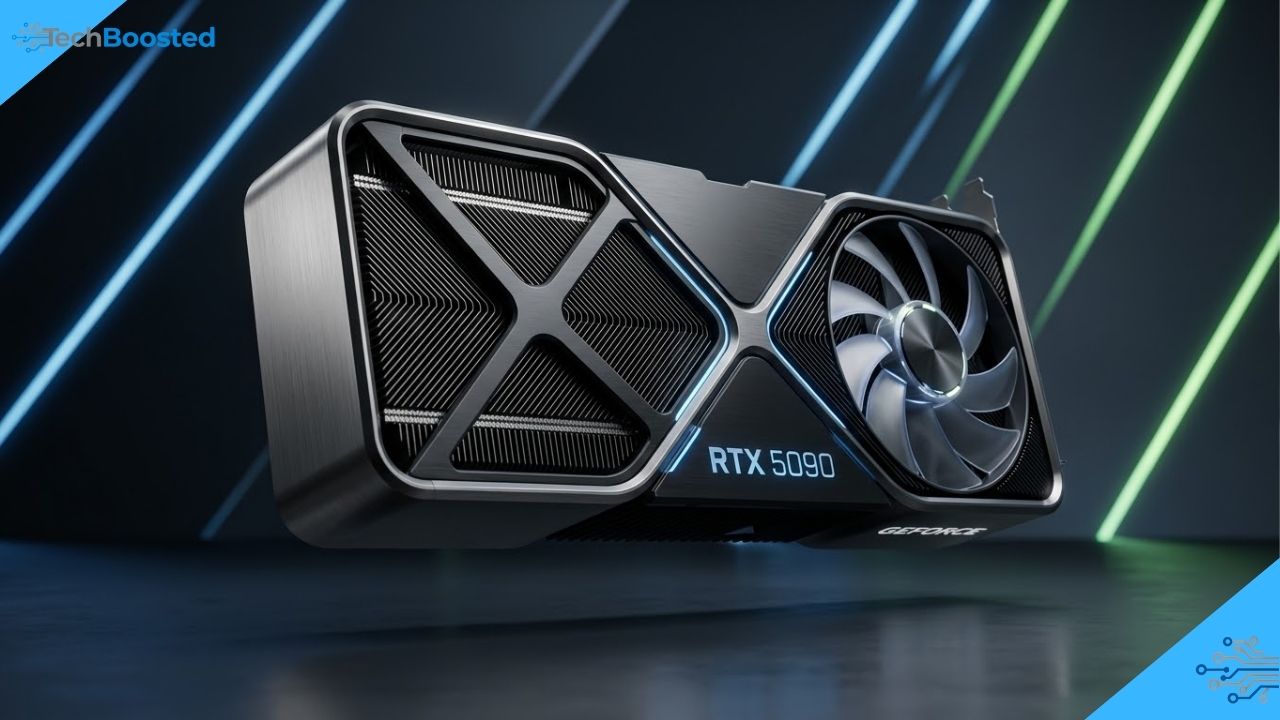
The NVIDIA GeForce RTX 5090 is expected to represent the next major leap in graphics technology for high-end gaming PCs. As the successor to the powerful NVIDIA GeForce RTX 4090, this upcoming GPU aims to push performance boundaries in areas such as 4K gaming, AI-driven rendering, and advanced ray tracing. Enthusiasts and content creators are already paying close attention to early leaks and industry discussions about what the NVIDIA GeForce RTX 5090 could deliver. NVIDIA has consistently led the GPU market with innovative features, and expectations for this flagship card are extremely high. Gamers anticipate smoother frame rates, improved efficiency, and stronger support for next-generation graphics technologies.
Another reason the NVIDIA GeForce RTX 5090 is attracting attention is the rapid growth of demanding modern games and professional workloads. Titles built on advanced engines require significantly more graphical power than previous generations. Because of this trend, high-performance GPUs have become essential for enthusiasts who want to experience games at maximum settings. The upcoming card from NVIDIA is expected to introduce improvements in architecture, memory speed, and AI-based rendering tools. These advancements could make the NVIDIA GeForce RTX 5090 one of the most powerful consumer graphics cards ever produced, setting a new benchmark for performance in gaming and creative applications.
Overview of the NVIDIA GeForce RTX 5090
The NVIDIA GeForce RTX 5090 represents the flagship model in the next generation of NVIDIA graphics cards. Positioned above previous high-end models, it aims to deliver exceptional performance for gamers, streamers, and professional creators. The GPU will likely build upon the success of the NVIDIA GeForce RTX 4090 while introducing new technologies designed to enhance rendering speed and efficiency. Many analysts expect the NVIDIA GeForce RTX 5090 to include improvements in shader performance, ray tracing acceleration, and AI processing capabilities. These features will help handle modern workloads such as real-time ray tracing and complex visual simulations with much greater efficiency.
Another major aspect of the NVIDIA GeForce RTX 5090 is its role in pushing the boundaries of graphical realism. Modern games increasingly rely on advanced lighting techniques and large open environments that demand powerful hardware. By delivering stronger processing capabilities and faster memory, this new GPU may allow gamers to run demanding titles at extremely high resolutions with minimal performance drops. NVIDIA’s ongoing focus on AI-based rendering technologies means the NVIDIA GeForce RTX 5090 could also improve image quality while maintaining smooth gameplay, making it a powerful upgrade option for enthusiasts seeking cutting-edge performance.
Blackwell Architecture and Next-Generation Technology
The NVIDIA GeForce RTX 5090 is widely expected to use the next-generation GPU architecture known as Blackwell. This architecture represents a significant technological advancement compared to the previous Ada Lovelace architecture used in earlier RTX cards. Blackwell is designed to improve computational efficiency while delivering greater raw power. As a result, the NVIDIA GeForce RTX 5090 could achieve better performance per watt, meaning higher frame rates without dramatically increasing energy consumption. Such improvements are crucial as games and applications continue to demand more complex graphical calculations.
Another important benefit of the Blackwell architecture is its potential to enhance AI-driven processes. NVIDIA has invested heavily in artificial intelligence technologies that assist with rendering, image reconstruction, and performance optimization. The NVIDIA GeForce RTX 5090 may feature upgraded tensor cores capable of handling advanced AI tasks faster than previous GPUs. This advancement could improve technologies such as DLSS and AI-based frame generation. With these improvements, the NVIDIA GeForce RTX 5090 may deliver both higher performance and improved visual fidelity, offering a powerful platform for next-generation gaming experiences.
Expected Specifications of the RTX 5090
Although official specifications remain unconfirmed, several industry rumors provide insight into what the NVIDIA GeForce RTX 5090 might include. Analysts predict a significant increase in CUDA core count compared with the NVIDIA GeForce RTX 4090. More cores would allow the GPU to process larger workloads simultaneously, improving performance in both gaming and professional applications. In addition, the NVIDIA GeForce RTX 5090 is expected to include faster GDDR7 memory, which would deliver much higher bandwidth than previous memory technologies.
The GPU may also feature an expanded memory capacity to support high-resolution textures and complex rendering tasks. Reports suggest the NVIDIA GeForce RTX 5090 could include around 32GB of VRAM, making it ideal for demanding workloads such as 3D rendering, machine learning, and video editing. This combination of increased core count and faster memory could dramatically improve the GPU’s ability to handle modern graphics workloads. If these predictions prove accurate, the NVIDIA GeForce RTX 5090 will likely become one of the most powerful consumer graphics cards ever produced.
Gaming Performance at 4K and Beyond
Gaming performance is one of the most anticipated aspects of the NVIDIA GeForce RTX 5090. The card is expected to deliver exceptional frame rates at 4K resolution, even in the most demanding modern titles. Games that heavily utilize ray tracing and advanced lighting effects often challenge current hardware, but the NVIDIA GeForce RTX 5090 may overcome these limitations. With stronger processing power and improved memory bandwidth, gamers could enjoy ultra-high settings without sacrificing performance. This makes the GPU particularly attractive for enthusiasts who want the best visual experience possible.
Beyond 4K gaming, the NVIDIA GeForce RTX 5090 could also open the door to smoother performance at emerging resolutions such as 8K. While 8K gaming remains relatively niche, powerful hardware is required to make it viable. NVIDIA’s flagship GPU may provide the computational power needed to handle these extreme resolutions. By combining raw power with AI-driven performance enhancements, the NVIDIA GeForce RTX 5090 might redefine what gamers expect from a high-end graphics card in the next generation of PC gaming.
Ray Tracing and AI Rendering Improvements
Ray tracing technology has become one of the defining features of modern GPUs, and the NVIDIA GeForce RTX 5090 is expected to push this technology even further. Ray tracing simulates realistic lighting, reflections, and shadows by tracing the path of light within a virtual environment. While earlier GPUs supported this feature, performance limitations sometimes forced players to lower graphical settings. The NVIDIA GeForce RTX 5090 could significantly improve ray tracing efficiency through upgraded RT cores and enhanced architecture.
In addition to traditional ray tracing improvements, the NVIDIA GeForce RTX 5090 will likely rely heavily on AI-assisted rendering techniques. NVIDIA’s advanced tensor cores enable AI algorithms to enhance visual quality while maintaining strong performance. These improvements allow the GPU to generate realistic lighting and reflections more efficiently. As a result, games may achieve cinematic visual quality without sacrificing frame rates. By combining powerful hardware with intelligent rendering techniques, the NVIDIA GeForce RTX 5090 aims to deliver an unprecedented level of graphical realism.
DLSS Technology and AI Frame Generation
A key feature expected in the NVIDIA GeForce RTX 5090 is the next evolution of NVIDIA’s AI-powered upscaling technology known as NVIDIA DLSS. DLSS allows games to render at a lower resolution and then upscale the image using artificial intelligence. This technique dramatically improves frame rates while maintaining excellent image quality. With more advanced tensor cores, the NVIDIA GeForce RTX 5090 could introduce an even more refined version of DLSS capable of producing sharper images and smoother gameplay.
Another exciting development related to DLSS is AI frame generation. This technology predicts and creates additional frames between rendered frames, effectively increasing frame rates without requiring extra GPU workload. The NVIDIA GeForce RTX 5090 may significantly improve this feature, enabling extremely smooth gameplay even in demanding titles. With the combination of DLSS and frame generation, the GPU could deliver exceptional performance across a wide range of games. These technologies demonstrate how the NVIDIA GeForce RTX 5090 uses artificial intelligence to redefine graphics performance.
Power Consumption and Cooling Design
High-performance GPUs often require significant power, and the NVIDIA GeForce RTX 5090 will likely continue this trend. However, improvements in manufacturing processes and architecture may allow the GPU to operate more efficiently than previous models. By optimizing power delivery and thermal performance, NVIDIA aims to ensure that the NVIDIA GeForce RTX 5090 can sustain high performance without overheating. Efficient power management is crucial for maintaining stable gameplay during extended gaming sessions.
Cooling solutions will also play a major role in the design of the NVIDIA GeForce RTX 5090. Manufacturers may introduce larger heatsinks, advanced vapor chamber cooling systems, and improved airflow designs to manage heat effectively. Custom partner cards could feature triple-fan or even quad-fan cooling systems. These improvements will help maintain stable operating temperatures even under heavy workloads. As a result, the NVIDIA GeForce RTX 5090 should deliver consistent performance while remaining reliable for long gaming or rendering sessions.
NVIDIA GeForce RTX 5090 vs RTX 4090 Comparison
Comparisons between the NVIDIA GeForce RTX 5090 and the previous flagship NVIDIA GeForce RTX 4090 are inevitable. The RTX 4090 already delivers exceptional gaming performance, making it one of the most powerful GPUs available today. However, the NVIDIA GeForce RTX 5090 is expected to surpass it in several areas, including raw computational power, memory bandwidth, and AI processing capabilities. These improvements may result in noticeably higher frame rates and smoother gameplay at high resolutions.
Another area where the NVIDIA GeForce RTX 5090 may outperform its predecessor is efficiency. New architecture improvements could allow the GPU to deliver stronger performance without proportionally increasing power consumption. Additionally, upgraded ray tracing and AI features may significantly enhance visual quality in supported games. While the RTX 4090 remains a powerful card, the NVIDIA GeForce RTX 5090 aims to push the boundaries of what modern GPUs can achieve in gaming and professional workloads.
Price Expectations and Market Position
Pricing is always an important factor when discussing flagship GPUs. The NVIDIA GeForce RTX 5090 will likely target the premium segment of the market, similar to previous high-end models. Considering the price of the NVIDIA GeForce RTX 4090 at launch, analysts expect the new GPU to carry a similarly high price tag. However, the significant improvements in performance and technology could justify the cost for enthusiasts who want the best possible gaming hardware.
The NVIDIA GeForce RTX 5090 will probably compete with high-performance graphics cards from other manufacturers. By offering advanced AI features, strong ray tracing capabilities, and exceptional raw power, NVIDIA aims to maintain its leadership in the high-end GPU market. Although the card may not be affordable for every gamer, it will likely become the ultimate option for enthusiasts and professional creators who require top-tier performance.
Who Should Upgrade to the RTX 5090?
The NVIDIA GeForce RTX 5090 is designed primarily for gamers and professionals who demand maximum performance from their systems. Enthusiasts who want to play modern games at 4K resolution with ultra settings will benefit significantly from the GPU’s power. Additionally, users involved in video editing, 3D modeling, and AI research may find the NVIDIA GeForce RTX 5090 particularly useful due to its strong computational capabilities.
However, not every gamer will need such a powerful GPU. Players using mid-range systems may prefer more affordable graphics cards that still deliver solid performance. The NVIDIA GeForce RTX 5090 targets users who want cutting-edge technology and are willing to invest in top-tier hardware. For those individuals, upgrading to this GPU could provide a significant performance boost and ensure their systems remain capable of handling demanding games and applications for years to come.
Conclusion
The NVIDIA GeForce RTX 5090 is shaping up to be one of the most exciting graphics cards in recent years. With improvements in architecture, AI rendering, ray tracing, and memory performance, it has the potential to redefine high-end PC gaming. Building on the success of the NVIDIA GeForce RTX 4090, this next-generation GPU aims to deliver unprecedented performance and visual fidelity.
As gaming technology continues to evolve, powerful hardware becomes increasingly important. The NVIDIA GeForce RTX 5090 could provide the performance needed to support future graphics innovations, including advanced AI rendering and ultra-high-resolution gaming. For enthusiasts seeking the ultimate gaming experience, this GPU may become the most desirable upgrade in the next generation of PC hardware.
Frequently Asked Questions
What is the NVIDIA GeForce RTX 5090?
The NVIDIA GeForce RTX 5090 is an upcoming flagship graphics card expected to deliver next-generation gaming and AI performance.
When will the NVIDIA GeForce RTX 5090 release?
NVIDIA has not confirmed an official release date yet, but industry rumors suggest it could launch in the next GPU generation cycle.
Will the NVIDIA GeForce RTX 5090 support DLSS?
Yes, the GPU is expected to support an advanced version of NVIDIA DLSS technology for improved performance.
Is the RTX 5090 better than the RTX 4090?
The NVIDIA GeForce RTX 5090 is expected to outperform the RTX 4090 in gaming, AI processing, and ray tracing tasks.
How much VRAM will the RTX 5090 have?
Many leaks suggest the GPU may include around 32GB of next-generation GDDR memory.
Who should buy the RTX 5090?
Gamers, creators, and professionals who require top-tier graphics performance will benefit the most from the NVIDIA GeForce RTX 5090.
Stay updated with the latest GPU news, gaming insights, and in-depth tech coverage at TECHBOOSTED