

Table of Contents
DJI Pocket 4 Overview
DJI Pocket 4 emerges as the latest innovation in DJI’s Osmo Pocket series, designed for content creators seeking professional-grade video in a compact form factor. Building on the success of the Pocket 3, this handheld gimbal camera promises enhanced sensor technology, superior stabilization, and advanced video capabilities tailored for vlogging, travel filming, and social media production. Leaks and rumors highlight its potential to dominate the pocket-sized camera market with features like 4K 120fps recording and AI-powered tracking.
Evolution from Previous Models
The DJI Pocket series has evolved significantly since its inception, with the Pocket 3 introducing a 1-inch CMOS sensor and 4K 60fps capabilities. The DJI Pocket 4 takes this further by upgrading to a larger stacked CMOS sensor, potentially 1/1.1-inch or bigger, delivering sharper details and better low-light performance. This progression reflects DJI’s commitment to miniaturizing high-end cinematography tools, making professional results accessible without bulky rigs.
Advanced Sensor and Imaging Technology
At the heart of the DJI Pocket 4 lies an upgraded image sensor, rumored to be a 50MP main sensor paired with a secondary 1/1.3-inch unit for versatile shooting. This setup supports 4K video at up to 120fps or even 240fps in some modes, enabling smooth slow-motion footage with minimal motion blur. Enhanced HDR and 10-bit D-Log M color profiles allow for extensive post-production grading, ensuring vibrant colors and dynamic range straight from the camera.
Stabilization and Gimbal Innovations
The DJI Pocket 4 introduces a 4-axis magnetic levitation gimbal combined with AI prediction algorithms, surpassing the 3-axis system of its predecessor. This provides ultra-smooth footage even during fast movements or low-light conditions, with added AI horizon leveling for perfect framing. SmartTrack 6.0 enhances subject tracking, offering faster reacquisition and voice-activated controls for hands-free operation, ideal for solo creators.
Display and User Interface Upgrades
Leaks suggest a larger, fully articulating flip touchscreen on the DJI Pocket 4, improving visibility for vlogging and self-recording compared to the Pocket 3’s 2-inch rotatable display. Higher brightness levels ensure usability in direct sunlight, while a responsive touch interface streamlines menu navigation and live-view monitoring. Additional quick-control buttons and a potential secondary information display further enhance one-handed operation.
Video Recording Capabilities
Video enthusiasts will appreciate the DJI Pocket 4’s expanded frame rates, including 4K at 120fps and possibly 1080p at 240fps for cinematic slow-motion. Dual-camera leaks indicate simultaneous front-and-rear recording, perfect for reaction videos or interviews. Support for 8K on the secondary sensor and improved onboard processing reduces the need for external editing in basic workflows.
Battery Life and Power Management
With a battery approximately 20% larger than the Pocket 3’s, the DJI Pocket 4 promises extended runtime, potentially exceeding 166 minutes of continuous recording. Fast-charging via USB-C and efficient power management support all-day shoots without interruptions. This upgrade addresses common complaints about battery drain during high-frame-rate or HDR modes.
Connectivity and Accessory Ecosystem
The DJI Pocket 4 upgrades to Wi-Fi 6 and Bluetooth 5.2 for faster wireless transfers and stable app integration via the DJI Mimo app. Compatibility with existing Osmo accessories like wide-angle lenses, microphones, and handles ensures seamless expansion. New features may include integrated LiDAR for precise autofocus in gimbals like the RS 5 series.
Design and Build Enhancements
Sporting a sleeker, taller body with advanced controls, the DJI Pocket 4 maintains DJI’s pocketable form factor while adding durability for travel and action use. Spy shots reveal a redesigned ergonomic grip and protective elements, making it more robust than predecessors. Weight remains lightweight, around 180-200 grams, for ultimate portability.
Audio Recording Improvements
DJI continues to prioritize audio with multiple microphones on the Pocket 4, potentially up to four for 360-degree capture and wind noise reduction. Enhanced voice isolation and integration with external mics via the accessory dock deliver broadcast-quality sound, crucial for vloggers and filmmakers.
Software and AI Features
ActiveTrack 6.0 on the DJI Pocket 4 introduces smarter subject detection, obstacle avoidance in tracking, and voice commands for starting/stopping recordings. AI-driven editing tools in the companion app automate highlights reels, color correction, and stabilization tweaks, streamlining workflows for beginners and pros alike.
Comparison with Competitors
| Feature | DJI Pocket 4 (Expected) | GoPro Hero 13 | Insta360 GO 3S |
|---|---|---|---|
| Sensor Size | 1/1.1-inch CMOS | 1/1.9-inch | 1/1.7-inch |
| Max Video | 4K 120/240fps | 5.3K 60fps | 4K 120fps |
| Stabilization | 4-axis + AI | HyperSmooth 6.0 | FlowState |
| Screen | Larger flip touchscreen | Rear LCD | Magnetic pendant |
| Battery Life | ~200 mins | 170 mins | 170 mins (case) |
Pricing and Availability Rumors
Expected to launch around December 2025, the DJI Pocket 4 base model may retail for $500-600, with creator bundles adding $100-200 for accessories. This positions it competitively against action cameras while offering superior gimbal stabilization. Pre-orders could start post-announcement on December 18.
Ideal Use Cases for Creators
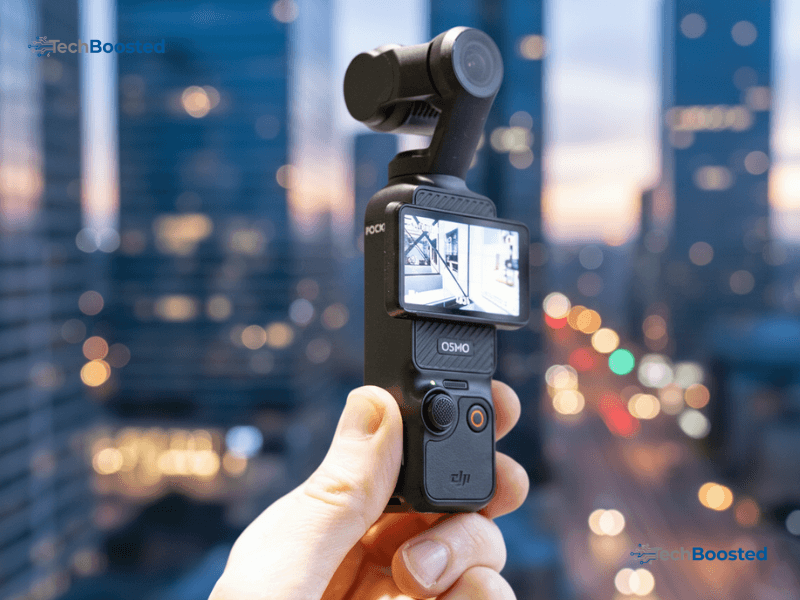
The DJI Pocket 4 excels in vlogging, travel vlogs, event coverage, and product reviews due to its compact size and pro features. Its dual-camera potential suits interviews, while high frame rates capture sports or wildlife dynamically. Low-light prowess makes it versatile for indoor shoots or night skies.
Future-Proofing and Longevity
With modular accessories and firmware updatability, the DJI Pocket 4 ensures longevity through software enhancements. Backward compatibility with Pocket 3 lenses and apps minimizes upgrade costs, appealing to existing users.
Professional Applications
Beyond consumers, the DJI Pocket 4 targets filmmakers with 10-bit logging, raw photo bursts, and gimbal precision for B-roll, documentaries, and commercials. Integration with DJI’s drone ecosystem expands creative possibilities.
Conclusion
The DJI Pocket 4 stands poised to revolutionize handheld filmmaking with its larger sensor, 4K 120fps capabilities, advanced 4-axis stabilization, and AI features, making high-quality content creation more accessible than ever. As leaks solidify toward a late 2025 release, it promises to outshine competitors in portability and performance, ideal for creators at any level.
FAQs
What is the expected release date for DJI Pocket 4?
Rumors point to December 2025, possibly announced on December 18.
Does the DJI Pocket 4 have a larger sensor than Pocket 3?
Yes, upgraded to 1/1.1-inch or stacked CMOS for better low-light and detail.
What video frame rates does DJI Pocket 4 support?
Up to 4K 120fps or 240fps, plus 8K on secondary sensor.
Is the stabilization improved in DJI Pocket 4?
Features 4-axis magnetic gimbal with AI prediction for smoother footage.
Will DJI Pocket 4 have a flip screen?
Yes, a larger articulating touchscreen for better vlogging visibility.
How much will DJI Pocket 4 cost?
Estimated $500-600 for the base model with bundles higher.
Stay connected with the latest camera gear reviews and tech updates by visiting techboosted.co.uk. For in-depth guides on gimbal cameras and video tools, explore our comprehensive coverage.