
Table of Contents
Mac Studio vs Mac Pro is one of the most important buying decisions for professionals considering Apple’s high-performance desktop lineup in 2026. Both machines target power users, yet they are designed for very different workflows, budgets, and long-term needs. With Apple Silicon now fully matured, the gap between these two Macs is no longer just about raw power, but also about scalability, expandability, and value. Understanding how Mac Studio vs Mac Pro compares in real-world use cases helps creators, developers, and enterprises make smarter investments. This guide breaks down performance, design, upgradability, pricing, and future-proofing so you can confidently choose the right Mac for your work in 2026.
Design Philosophy and Target Users
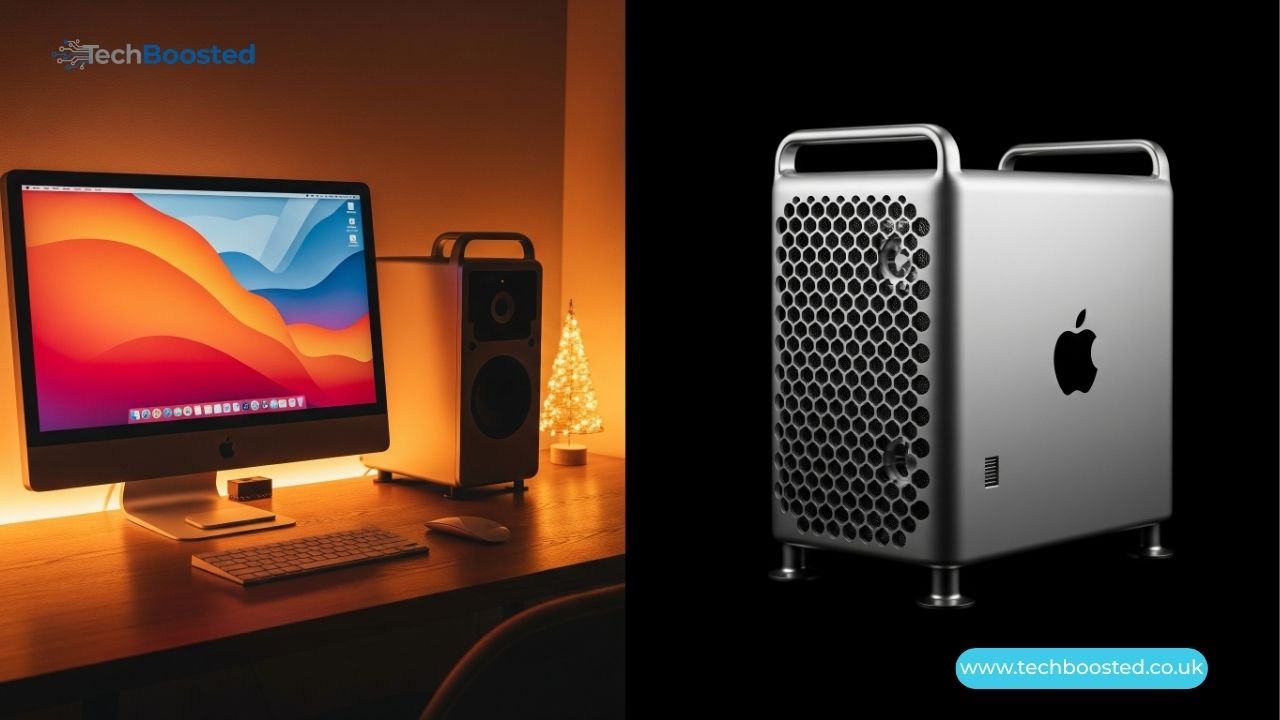
The Mac Studio vs Mac Pro comparison starts with design intent. Mac Studio is built as a compact, high-performance desktop for professionals who want maximum power in a minimal footprint. It fits easily on a desk and emphasizes efficiency. Mac Pro, on the other hand, is designed as a modular workstation aimed at studios, enterprises, and technical professionals who require flexibility and internal expansion. The tower form factor reflects this purpose. When evaluating Mac Studio vs Mac Pro, the core difference lies in whether you prioritize simplicity and compact power or full workstation-class modularity.
Performance and Apple Silicon Power
Performance is central to the Mac Studio vs Mac Pro debate in 2026. Both machines run on Apple Silicon, but Mac Pro configurations typically include higher-tier chips designed for sustained workloads. Mac Studio delivers exceptional performance for video editing, software development, and 3D work, often matching or exceeding expectations for its size. However, Mac Pro is engineered for continuous heavy workloads, such as film rendering or scientific simulations. In Mac Studio vs Mac Pro performance comparisons, Mac Studio excels in efficiency, while Mac Pro dominates in sustained, mission-critical processing.
CPU and GPU Capabilities
When comparing Mac Studio vs Mac Pro at the CPU and GPU level, the differences become clearer. Mac Studio configurations focus on high core counts balanced for power efficiency, making them ideal for multitasking and creative applications. Mac Pro supports more advanced GPU configurations, including higher memory ceilings and specialized acceleration for professional workflows. This matters for industries like animation, visual effects, and data science. In Mac Studio vs Mac Pro decisions, GPU-intensive users benefit more from Mac Pro, while CPU-balanced workloads often run exceptionally well on Mac Studio.
Memory and Unified Architecture
Memory architecture plays a major role in Mac Studio vs Mac Pro considerations. Both systems use unified memory, which significantly improves data access speeds between CPU and GPU. Mac Studio offers ample memory for most professional tasks, including high-resolution video editing and software builds. Mac Pro, however, supports much larger memory configurations, making it better suited for massive datasets or complex simulations. If your workflow depends on extremely large memory pools, Mac Studio vs Mac Pro tilts strongly toward Mac Pro as the safer long-term choice.
Storage Options and Flexibility
Storage flexibility further separates Mac Studio vs Mac Pro. Mac Studio offers fast internal SSD options that are more than sufficient for most professionals. However, internal storage upgrades are fixed at purchase. Mac Pro, in contrast, is designed for expandable storage solutions, including additional internal options and high-capacity external arrays. This flexibility matters for studios handling massive media libraries. In Mac Studio vs Mac Pro evaluations, users with growing storage demands often favor Mac Pro, while those relying on external SSDs may find Mac Studio perfectly adequate.
Expandability and PCIe Support
One of the most decisive factors in Mac Studio vs Mac Pro is expandability. Mac Studio relies on external connectivity for expansion, using Thunderbolt and USB-C. Mac Pro includes PCIe slots, allowing professionals to add specialized cards for audio processing, video capture, or networking. This internal expandability is critical for certain industries. When comparing Mac Studio vs Mac Pro, the need for internal expansion almost always justifies choosing Mac Pro, while users who prefer external peripherals may lean toward Mac Studio.
Connectivity and Ports
Connectivity is strong on both sides of the Mac Studio vs Mac Pro discussion. Mac Studio includes a wide range of ports in a compact form, making it convenient for desk setups. Mac Pro provides extensive connectivity options, including support for high-bandwidth professional devices. Both machines support multiple high-resolution displays, but Mac Pro is better suited for complex multi-monitor environments. In Mac Studio vs Mac Pro comparisons, connectivity is rarely a limitation, but Mac Pro offers more flexibility for advanced setups.
Noise, Cooling, and Sustained Workloads
Thermal performance is another area where Mac Studio vs Mac Pro diverges. Mac Studio is impressively quiet and efficient, even under heavy loads. However, Mac Pro is designed for sustained, round-the-clock workloads with advanced cooling systems. This makes it ideal for render farms and production environments. In Mac Studio vs Mac Pro decisions, users running continuous workloads benefit from Mac Pro’s thermal headroom, while intermittent heavy users may prefer Mac Studio’s balance of silence and power.
Pricing and Value Proposition
Price is often the deciding factor in Mac Studio vs Mac Pro discussions. Mac Studio delivers exceptional value, offering high performance at a significantly lower cost. Mac Pro commands a premium price justified by its expandability and enterprise focus. For many professionals, Mac Studio provides more than enough power without the steep investment. In Mac Studio vs Mac Pro evaluations, cost-conscious buyers usually favor Mac Studio, while organizations requiring customization and longevity justify the Mac Pro expense.
Software Compatibility and Ecosystem
Both machines benefit equally from Apple’s optimized macOS ecosystem. Professional software such as Final Cut Pro, Logic Pro, and Xcode performs excellently on both. In Mac Studio vs Mac Pro terms, software compatibility is not a differentiator. Instead, the decision hinges on how software scales with hardware. Applications that benefit from specialized hardware expansions naturally align better with Mac Pro, while most creative and development tools run flawlessly on Mac Studio.
Longevity and Future-Proofing
Future-proofing is critical in Mac Studio vs Mac Pro decisions. Mac Studio is ideal for users who upgrade every few years. Mac Pro, with its modular design, is intended for long-term use with incremental upgrades. This makes it more suitable for businesses planning extended deployment cycles. When evaluating Mac Studio vs Mac Pro, consider how long you plan to keep the system and whether future hardware expansion is essential.
Which Professionals Should Choose Each
Mac Studio vs Mac Pro ultimately comes down to user profile. Mac Studio is perfect for video editors, developers, designers, and independent creators who want top-tier performance without complexity. Mac Pro is designed for studios, enterprises, and specialists requiring internal expansion and maximum scalability. Matching your workflow to the right machine ensures you get the best return on investment.
Conclusion
The Mac Studio vs Mac Pro decision in 2026 depends on performance needs, budget, and long-term plans. Mac Studio offers incredible power, efficiency, and value in a compact form, making it ideal for most professionals. Mac Pro remains unmatched for expandability, sustained workloads, and enterprise environments. By understanding your workflow requirements, you can confidently choose between Mac Studio vs Mac Pro and invest in a Mac that supports your productivity for years to come.
FAQs
Is Mac Studio powerful enough for professional video editing?
Yes, it handles high-resolution editing and rendering very well.
Does Mac Pro still make sense in 2026?
Yes, especially for expandable and enterprise-level workflows.
Can Mac Studio replace Mac Pro for most users?
For many professionals, yes, unless internal expansion is required.
Is Mac Pro more future-proof than Mac Studio?
Yes, due to its modular and upgrade-friendly design.
Which is better for developers?
Mac Studio is sufficient for most development workloads.
Is the price difference justified?
Only if you need Mac Pro’s unique expandability.
Stay connected with Techboosted.co.uk through our latest Apple hardware insights.
Replit Alternatives in 2026: Top Platforms Every Developer Should Know