

In today’s fast-paced digital landscape, businesses need web applications that are not only visually stunning but also lightning-fast, scalable, and maintainable. This is where professional React.js development services come into play. React.js (commonly known as React) has established itself as the leading JavaScript library for building dynamic user interfaces, powering some of the biggest names on the internet including Facebook, Instagram, Netflix, Airbnb, and Uber Eats. Companies that invest in expert React.js development services gain a significant competitive edge by delivering seamless user experiences across devices while keeping long-term maintenance costs low.
What Makes React.js the Preferred Choice for Modern Front-End Development?
React.js was created by Facebook in 2013 and quickly became the gold standard because of its component-based architecture and virtual DOM. Unlike traditional frameworks that manipulate the browser DOM directly (which can be slow and resource-intensive), React uses a virtual DOM that calculates the minimal number of changes needed before updating the actual browser DOM. This results in dramatically improved performance, especially in complex, data-heavy applications. Professional React.js development services leverage these core advantages to build applications that feel instant and responsive even when handling thousands of interactive elements simultaneously.
Key Benefits of Partnering with Expert React.js Development Services
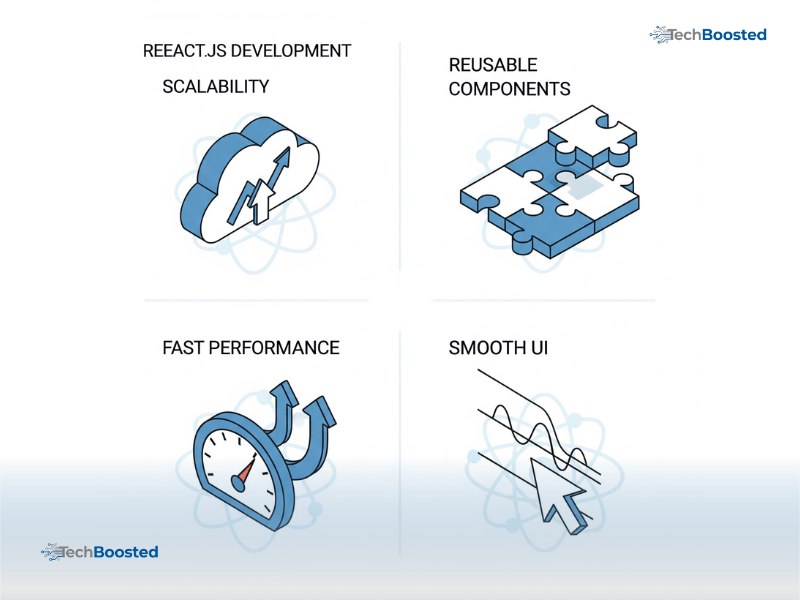
When you hire a dedicated React.js development team, you’re not just getting code you’re gaining years of specialized experience. Top-tier agencies bring deep knowledge of the entire React ecosystem, including Redux or Zustand for state management, React Router for seamless navigation, Next.js for server-side rendering and static generation, and advanced tooling like TypeScript, Jest, and Storybook. This expertise translates into faster time-to-market, cleaner codebases, and applications that are easier to scale as your business grows. Moreover, experienced teams follow industry best practices for performance optimization, accessibility (a11y), and SEO critical factors that many in-house developers overlook.
Building Scalable Single-Page Applications (SPAs) with React.js
One of the primary reasons enterprises choose React.js development services is the library’s unmatched ability to create powerful single-page applications. SPAs load a single HTML page and dynamically update content as users interact, eliminating annoying full-page reloads. Netflix and Airbnb are classic examples: users can browse thousands of titles or listings with buttery-smooth transitions. Professional React developers architect these applications using reusable components, lazy loading, code splitting, and efficient state management patterns ensuring the app remains fast and responsive even as features expand over years.
The Power of Reusable Components and Design Systems
At the heart of React’s philosophy is the concept of reusable components. A button, modal, card, or navigation bar is built once and reused across the entire application (and even across multiple projects). Leading React.js development services take this further by creating comprehensive design systems using tools like Storybook and engine and Styled Components or Tailwind CSS. The result? Consistent branding, drastically reduced development time for new features, and significantly lower bug rates. Large organizations such as Shopify and Atlassian have saved millions in development costs thanks to mature React-based design systems.
Server-Side Rendering and Static Site Generation with Next.js
While React itself is client-side, the introduction of Next.js (a React framework developed by Vercel) revolutionized how React applications handle SEO and initial load performance. Professional React.js development services now almost universally recommend Next.js for any public-facing web application. Features like Server-Side Rendering (SSR), Static Site Generation (SSG), and Incremental Static Regeneration (ISR) ensure that search engines can crawl content easily and users see fully rendered pages in under a second even on slow mobile connections. E-commerce giants and content-heavy sites rely on these capabilities to rank higher and convert better.
Seamless Integration with Backend Technologies and APIs
Modern web applications rarely live in isolation. Expert React.js developers excel at connecting React frontends to any backend whether it’s Node.js, Python/Django, Ruby on Rails, Java Spring Boot, or .NET Core. Using GraphQL (via Apollo Client) or REST APIs, they build robust data layers that keep the UI perfectly in sync with server state. Real-world examples include Dropbox’s redesigned file viewer and PayPal’s checkout flow, both rebuilt with React to handle complex real-time data while maintaining exceptional reliability.
Performance Optimization Techniques Used by Top React Teams
Speed is no longer optional it’s the number one factor in user satisfaction and SEO ranking. Professional React.js development services employ advanced optimization strategies such as memoization (React.memo, useMemo, useCallback), proper key usage in lists, virtualized long lists with react-window or react-virtualized, image optimization with Next.js Image component, and font optimization to eliminate layout shifts. Tools like Lighthouse, WebPageTest, and BundlePhobia are used religiously to keep bundle sizes under control. The result is routinely achieving 98–100 Lighthouse performance scores even on feature-rich enterprise dashboards.
Ensuring Accessibility and Inclusive Design from Day One
Accessibility is not an afterthought for reputable React.js agencies. They follow WCAG 2.1+ guidelines, implement proper ARIA attributes, ensure keyboard navigation works flawlessly, and test with screen readers like NVDA and VoiceOver. Components are built with semantic HTML and focus management from the start. This not only helps avoid costly lawsuits but also expands your audience over 1 billion people worldwide live with some form of disability.
Security Best Practices in Enterprise React Applications
Security vulnerabilities in front-end code can be just as damaging as backend flaws. Leading React.js development services implement measures such as Content Security Policy (CSP) headers, protection against XSS through proper sanitization, secure authentication flows using OAuth 2.0/OpenID Connect with libraries like Auth0 or Firebase Auth, and safe handling of environment variables. They also keep dependencies updated using tools like Dependabot and conduct regular penetration testing to ensure your application stays bulletproof.
The Cost-Effectiveness of Choosing Professional React.js Development Services
While hiring an experienced React.js team may seem more expensive upfront than going with the cheapest freelancer, the long-term ROI is undeniable. Professional agencies deliver production-ready, well-documented, and thoroughly tested code that requires far less maintenance. Bugs are caught early through comprehensive unit, integration, and end-to-end testing (using Jest, React Testing Library, and Cypress). Many businesses report reducing their technical debt by 70–80% after migrating to a professionally built React codebase.
Future-Proofing Your Application with the Latest React Features
The React ecosystem evolves rapidly Concurrent Mode, Server Components, Suspense for data fetching, and the new React Forget compiler are on the horizon. Established React.js development services stay ahead of these changes and architect applications that can adopt new features with minimal refactoring. This future-proofing ensures your product won’t need a complete rewrite in two to three years, protecting your investment for the long haul.
Real-World Success Stories Powered by React.js
Major brands continue to choose React for mission-critical applications. BBC redesigned its entire news platform using React and Next.js, achieving 40% faster load times. Walmart rebuilt its e-commerce frontend with React and saw a 20% increase in conversions. The New York Times uses React to deliver interactive storytelling experiences that engage millions daily. These case studies demonstrate that when React.js development services are executed by experts, the results speak for themselves.
Conclusion
Choosing the right React.js development services partner is one of the most important decisions a modern business can make. From lightning-fast performance and flawless user experience to scalability, maintainability, and future-readiness, professional React teams deliver measurable value at every stage of the product lifecycle. Whether you’re building a startup MVP or transforming an enterprise platform, investing in expert React.js development is no longer optional it’s the proven path to digital success in 2025 and beyond.
Frequently Asked Questions About React.js Development Services
How long does it take to develop a medium-sized React.js application? A typical medium-sized business application (e-commerce dashboard, SaaS product, etc.) takes 3–6 months when built by an experienced team, depending on complexity and feature set.
Is React.js suitable for large enterprise applications? Yes Facebook, Netflix, Airbnb, and Salesforce all run massive React codebases with hundreds of developers contributing daily. Proper architecture and tooling make it highly scalable.
Should I choose React Native if I need a mobile app as well? Absolutely. Many agencies offer both React.js (web) and React Native (iOS/Android) under one roof, allowing 70–90% code reuse between web and mobile versions.
How much do professional React.js development services cost in 2025? Rates vary by region and expertise. North American/European agencies typically charge $80–$200/hour, while maintaining enterprise-grade quality and communication.
Can you migrate an existing Angular or Vue.js app to React? Yes many companies successfully migrate legacy codebases incrementally using tools like Module Federation or micro-frontends, avoiding big-bang rewrites.
Does React.js work well with headless CMS platforms? React pairs perfectly with headless CMSs like Contentful, Strapi, Sanity, or WordPress (via WPGraphQL), enabling lightning-fast content-driven sites.
Stay connected with the latest insights on web development, UI/UX trends, and digital transformation by following TechBoosted.co.uk your trusted partner for cutting-edge custom software solutions.