
Organizational Innovation Examples: How It Works and Why It Matters – The Core Definition Every Leader Must Know
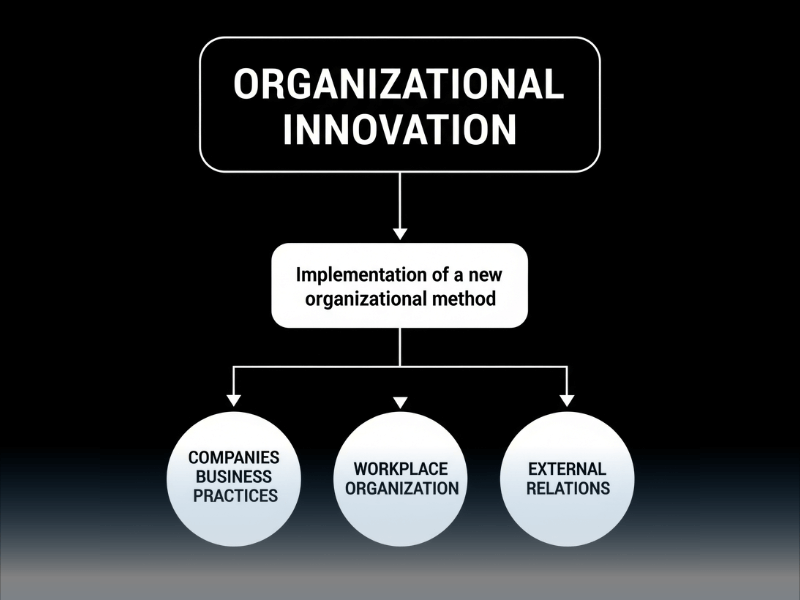
Organizational innovation examples: How It Works and Why It Matters is not another buzzword it is the deliberate, systematic redesign of how an entire company thinks, decides, and executes. While product innovation launches new gadgets and process innovation automates old tasks, organizational innovation examples: How It Works and Why It Matters rewrites the human operating system of the enterprise: flattening outdated hierarchies, dissolving toxic silos, empowering frontline teams with real decision rights, and hard-wiring adaptability into every policy, meeting, and metric. McKinsey’s latest global survey reveals that companies mastering organizational innovation examples: How It Works and Why It Matters deliver 2.1× higher resilience, 2.5× superior financial returns, 3.0× faster revenue growth, and a staggering 4.8× greater innovation output than laggards. The mechanism is brutally simple yet profoundly difficult: replace fear-based command-and-control with radical trust, treat every employee as an intrapreneur, and obsess over customer co-creation. In an age where 85% of AI projects collapse because of cultural rigidity, organizational innovation examples: How It Works and Why It Matters has become the ultimate differentiator turning disruption survivors into disruption architects that competitors desperately copy but rarely match.
The Proven Mechanics Behind Organizational Innovation Examples: How It Works and Why It Matters
Organizational innovation examples: How It Works and Why It Matters follow a repeatable flywheel: Create → Diffuse → Reinforce → Accelerate. Creation starts with psychological safety Google’s Project Aristotle proved it is the #1 predictor of team performance. Diffusion happens through lightweight playbooks that give squads full autonomy inside crystal-clear boundaries. Reinforcement arrives via AI-powered dashboards that surface decision bottlenecks in real time and quarterly “kill-the-sacred-cow” rituals. The acceleration phase kicks in when ecosystem thinking turns suppliers, startups, and even competitors into extended R&D labs. Three non-negotiable pillars make organizational innovation examples: How It Works and Why It Matters unstoppable: (1) decentralized authority that pushes decisions to the person closest to the problem, (2) ambidextrous leadership that funds today’s cash cow while starving tomorrow’s failures early, and (3) talent-density obsession that removes underperformers fast and pays top performers disproportionately. Companies living this flywheel slash time-to-market by 40-60% and eliminate the hidden 20-30% “friction tax” that silently kills margins in traditional organizations.
Why Organizational Innovation Examples: How It Works and Why It Matters Is Now Mission-Critical
Every CEO claims to love innovation, yet most still run 1970s hierarchies in 2025 clothing. Organizational innovation examples: How It Works and Why It Matters matters because rigid structures create exponential “decision debt”: approvals that take 37 days, information hoarded by middle managers, and brilliant ideas murdered in PowerPoint graveyards. Top-quartile organizational-health companies are 3.5× more likely to crush their peers over a decade. They unlock the full ROI of billion-dollar tech stacks AI delivers 7% cost cuts in stiff cultures but 42% value creation in agile ones. Most importantly, talent votes with LinkedIn: companies scoring 80+ on autonomy indices enjoy 6× lower regrettable attrition and poach the exact people competitors bleed to retain. Bottom line: organizational innovation examples: How It Works and Why It Matters is no longer optional HR fluff it is the deepest, widest moat any company can build in the age of perpetual creative destruction.
Haier – The Mother of All Organizational Innovation Examples: How It Works and Why It Matters
Haier’s journey from near-bankrupt refrigerator maker to world #1 appliance ecosystem is the gold standard in organizational innovation examples: How It Works and Why It Matters. CEO Zhang Ruimin smashed the traditional pyramid and birthed 4,000+ self-governing micro-enterprises (MEs). Every ME runs its own P&L, hires, fires, sets salaries, and even acquires other MEs. Customers co-design products on Haier’s platform and pay only for what they love zero-distance user focus baked into the structure. Result? Product-launch cycles collapsed from 18 months to weeks, revenue exploded 18×, and employee headcount barely doubled. Haier proves that organizational innovation examples: How It Works and Why It Matters can scale to 60,000+ people in heavy manufacturing while moving faster than Silicon Valley startups.
Spotify’s Squad Model – Organizational Innovation Examples: How It Works and Why It Matters in Action
Spotify wrote the playbook that thousands now copy. Instead of siloed departments, Spotify runs on autonomous squads (6-8 people) that own features end-to-end, grouped into tribes (<150 people), aligned by chapters and guilds, and steered by unmissable mission statements instead of micromanagement. Complete freedom in “how,” zero freedom in “what.” This structure let Spotify scale from 30 to 8,000+ employees while shipping thousands of experiments yearly most corporations would call that reckless; Spotify calls it Tuesday. ING Bank, Lego, and Barclays all launched full Spotify-model transformations because organizational innovation examples: How It Works and Why It Matters travel when you design for human nature first.
Amazon, Netflix, Toyota, ING – More Proof That Organizational Innovation Examples: How It Works and Why It Matters Wins
Amazon’s two-pizza teams and “working backwards” press-release ritual force customer obsession before a single line of code. Netflix replaced rules with context and the keeper test, creating the algorithm that knows you better than your therapist. Toyota’s andon cord and 5-Whys turned every problem into a learning gift decades before “fail fast” became cool. ING Bank reorganized 3,500 people into 350 squads in just 18 months, jumping customer NPS 20 points and turning a 350-year-old bank into a fintech predator. Each story reinforces the same truth: organizational innovation examples: How It Works and Why It Matters compound faster than any technology alone ever could.
Conclusion:
The companies that dominate the next decade will not be the ones with the biggest R&D budgets they will be the ones that mastered organizational innovation examples: How It Works and Why It Matters. Haier, Spotify, Amazon, Netflix, Toyota, and ING didn’t wait for permission; they rewrote their operating systems and left competitors choking on dust. Your playbook is identical: demolish decision debt, weaponize trust, measure learning velocity, and treat structure as code you refactor quarterly. Organizational innovation examples: How It Works and Why It Matters is not theory it is the only proven path from survival to supremacy. The only question left: when do you begin?
FAQs
What exactly are organizational innovation examples: How It Works and Why It Matters? Organizational innovation examples: How It Works and Why It Matters refer to radical redesigns of structure, culture, and decision rights think Haier’s 4,000 micro-enterprises or Spotify’s squads that deliver 3-5× superior business outcomes.
How is organizational innovation examples: How It Works and Why It Matters different from digital transformation? Digital transformation installs tools; organizational innovation examples: How It Works and Why It Matters changes how humans use those tools. One without the other delivers table-stakes results.
Can large enterprises really execute organizational innovation examples: How It Works and Why It Matters? Absolutely Haier (60,000+ employees) and ING (55,000+) moved faster than most startups by replacing hierarchy with autonomous units and ruthless simplification.
What is the biggest roadblock to organizational innovation examples: How It Works and Why It Matters? Middle managers whose identity is tied to controlling information. Top performers retrain, repurpose, or respectfully exit them within 90 days.
How fast can organizational innovation examples: How It Works and Why It Matters show results? Leading indicators (engagement, decision speed) improve in 3-6 months. Full transformation takes 18-36 months with continuous evolution ING did 3,500 people in 18 months.
How do you measure success in organizational innovation examples: How It Works and Why It Matters? Track decision velocity, experiment rate, talent density, and innovation revenue %. Lagging indicators: 3-5× outperformance vs industry peers.
Stay connected with daily doses of game-changing business models, leadership frameworks, and fresh organizational innovation examples: How It Works and Why It Matters at TechBoosted.co.uk – your unfair advantage in corporate reinvention.