
Table of Contents
Artificial intelligence has evolved rapidly, and Moltbot has emerged as a sophisticated engine powering Openclaw, its approachable interface. While Moltbot handles reasoning, context management, and adaptive learning behind the scenes, Openclaw serves as the familiar face interacting with users. This separation allows the assistant to evolve continuously without overwhelming or confusing users. By decoupling intelligence from presentation, updates and improvements occur seamlessly. Understanding the journey of Moltbot clarifies why Openclaw became the recognizable identity of this next-generation assistant. The combination ensures both technical sophistication and usability, providing a dependable, consistent, and future-ready AI solution.
Moltbot: Origins and Vision
Moltbot was designed to address challenges in earlier AI assistants, emphasizing modularity, adaptability, and long-term learning. The intelligence engine continuously refines reasoning, retains context, and delivers responses across multiple domains. Its design allows the system to shed outdated logic while maintaining knowledge, symbolizing its “molt” concept. The goal was to create a backend capable of evolving independently while supporting a stable user interface. This architecture laid the foundation for Openclaw, which converts complex computational outputs into clear, understandable responses. By separating the engine from the interface, developers ensured flexibility, scalability, and consistent performance across diverse user scenarios.
Transition From Clawdbot to Openclaw
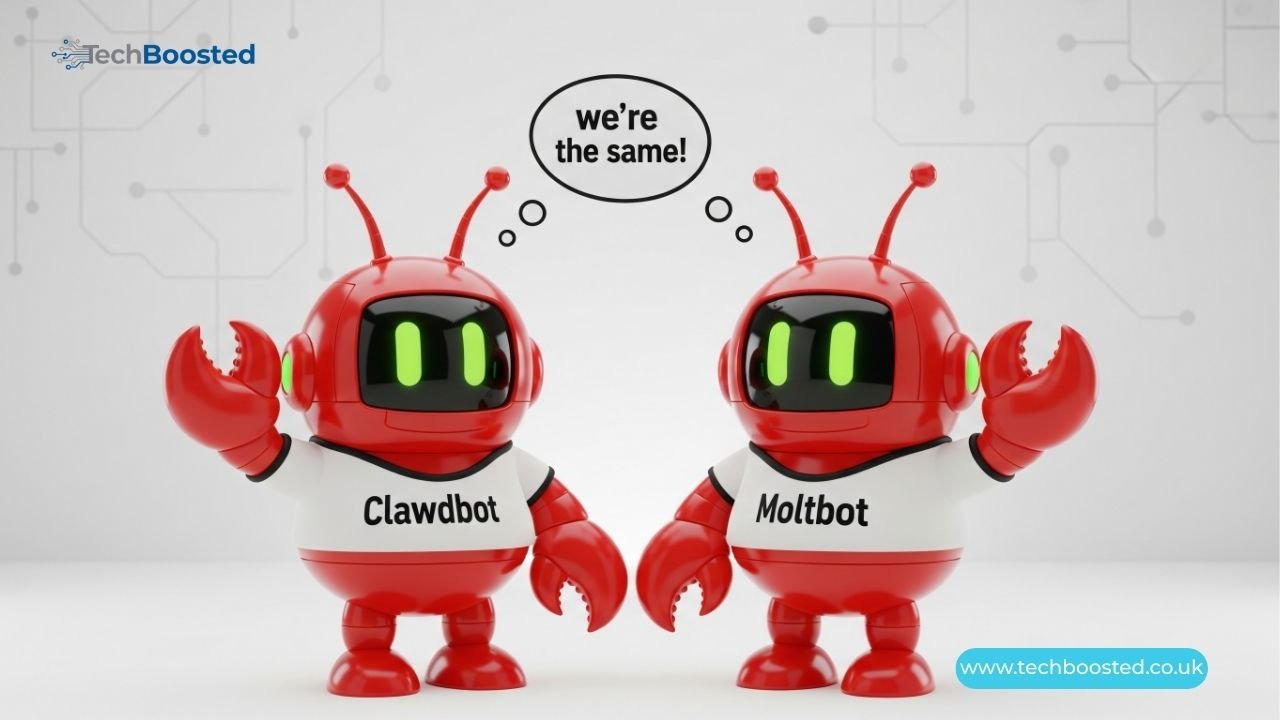
Previous versions, such as Clawdbot, demonstrated reliable computation but lacked an intuitive identity. Frequent updates caused confusion and limited adoption. Openclaw was introduced to provide a recognizable and approachable interface while leveraging the same powerful intelligence engine. Users now interact with Openclaw for guidance and queries, while Moltbot continues to process complex reasoning behind the scenes. This dual-layer approach ensures that backend improvements do not disrupt the user experience. By maintaining a consistent interface and predictable behavior, Openclaw enhanced trust and usability, while Moltbot focused on continuous learning and performance optimization.
Core Capabilities of Moltbot
The assistant’s backend is equipped with adaptive learning that improves accuracy based on interaction patterns. Multi-domain reasoning allows it to answer questions from various fields, while natural language processing ensures communication remains conversational. Transparency features explain decision logic, increasing user trust. Unlike static AI systems, Moltbot refines outputs dynamically for relevance and coherence. Its intelligence engine powers Openclaw, making advanced capabilities accessible without exposing users to technical complexity. This integration ensures that responses are contextually accurate, logically sound, and aligned with user expectations, reflecting the careful design of both the system and its interface.
How Openclaw Enhances the User Experience

Openclaw converts Moltbot’s complex reasoning into intuitive, approachable interactions. By maintaining context, conversations remain coherent and reduce repetitive queries. The interface emphasizes clarity, speed, and reliability, making tasks easier for users. Professionals, students, and casual users benefit from meaningful guidance and smoother workflows. Openclaw anticipates user needs responsibly, delivering actionable suggestions without overwhelming them. The combination of a powerful backend and an accessible interface ensures users experience both sophistication and simplicity. Context-aware responses, logical continuity, and natural communication are central to why Openclaw has gained user confidence, while Moltbot silently powers its intelligence.
Moltbot’s Technical Architecture
Moltbot is built on modular architecture that separates intelligence from interface. Updates, additional reasoning modules, and new features can be implemented without affecting user-facing operations. The system manages predictive reasoning, language understanding, and adaptive learning, providing results to Openclaw for human-readable presentation. Its design ensures performance consistency across platforms, including desktops, mobile devices, and enterprise applications. By maintaining this separation, Moltbot allows rapid innovation behind the scenes, while Openclaw continues delivering familiar and reliable interactions. This approach ensures the assistant remains scalable, efficient, and capable of evolving with user needs.
Security, Privacy, and Reliability
The design prioritizes security, privacy, and trust. The engine incorporates robust safeguards to ensure ethical AI behavior, responsible data handling, and controlled updates. Openclaw provides a consistent interface, reassuring users of reliability. Compliance with modern AI privacy standards further strengthens confidence in the system. Reliability is enhanced by evolutionary updates that improve capabilities without disrupting interactions. Together, the intelligence engine and interface maintain a secure environment while delivering consistent, accurate, and contextually aware responses. Users can rely on the assistant for personal and professional tasks without concern over unpredictable behavior or data misuse.
Moltbot for Professional and Enterprise Use
The system’s modular design makes it ideal for businesses and professional environments. It integrates seamlessly with productivity tools, data systems, and workflow platforms. Openclaw provides a user-friendly interface, minimizing the learning curve and ensuring adoption across teams. Moltbot’s intelligence supports research, customer support, and strategic decision-making by retaining context and providing predictive insights. Professionals benefit from automation, efficiency, and coherent guidance, while employees experience an intuitive and reliable assistant. This combination of backend intelligence and front-end usability demonstrates how Moltbot can serve as a robust solution for enterprise-scale AI deployment.
Industry Influence and Future of AI Assistants
Moltbot and Openclaw represent a broader trend toward modular AI systems with distinct intelligence and interface layers. Analysts consider this model sustainable for long-term AI deployment, allowing continuous backend improvement while maintaining user trust. Openclaw ensures familiarity and predictability, whereas the intelligence engine evolves in reasoning, capability, and adaptability. This approach has set a benchmark for future assistant design, showing that separating interface and intelligence enhances both innovation and usability. Moltbot exemplifies how thoughtful architecture can balance performance, accessibility, and reliability, paving the way for AI assistants that remain relevant and dependable.
Why Users Trust Moltbot
Users rely on the assistant due to consistent, transparent, and adaptive behavior. Continuous updates improve intelligence while Openclaw maintains predictable interactions. Context-aware learning ensures cumulative understanding over time, reducing repetitive instructions. Reliability, ethical decision-making, and clarity of responses enhance confidence, while the system’s design supports professional and casual use alike. Moltbot’s intelligence allows the assistant to grow in capability without confusing the user, creating a dependable and trustworthy AI solution. This balance of advanced reasoning and approachable interaction underpins long-term adoption and satisfaction.
Conclusion
The introduction of Openclaw as the assistant’s visible interface, while retaining Moltbot as the intelligence core, exemplifies a sustainable approach to AI development. This separation ensures continuous improvement without disrupting user experience. Openclaw maintains familiarity, clarity, and usability, while the backend system evolves in sophistication, accuracy, and reasoning. Users benefit from intelligent, contextually aware responses delivered reliably, making the assistant both powerful and approachable. Moltbot’s modular design guarantees longevity, while Openclaw ensures engagement and trust. Together, they illustrate how advanced AI can evolve responsibly, balancing innovation, reliability, and user-centric design.
Frequently Asked Questions (FAQs)
What is Moltbot?
Moltbot is the AI intelligence engine that powers Openclaw’s reasoning and learning capabilities.
Is Openclaw separate from Moltbot?
No, Openclaw is the interface that presents the assistant’s intelligence to users.
Why was Openclaw introduced?
Openclaw provides a recognizable, approachable assistant identity while Moltbot handles processing.
Does Moltbot continue to evolve?
Yes, the system continuously improves without changing user-facing behavior.
Can businesses use this assistant?
Yes, it integrates with workflows, enterprise systems, and productivity tools efficiently.
What makes Moltbot unique?
Its separation of intelligence from interface ensures reliability, adaptability, and user trust.
Stay connected with Techboosted.co.uk through our latest innovation insights.