
Table of Contents
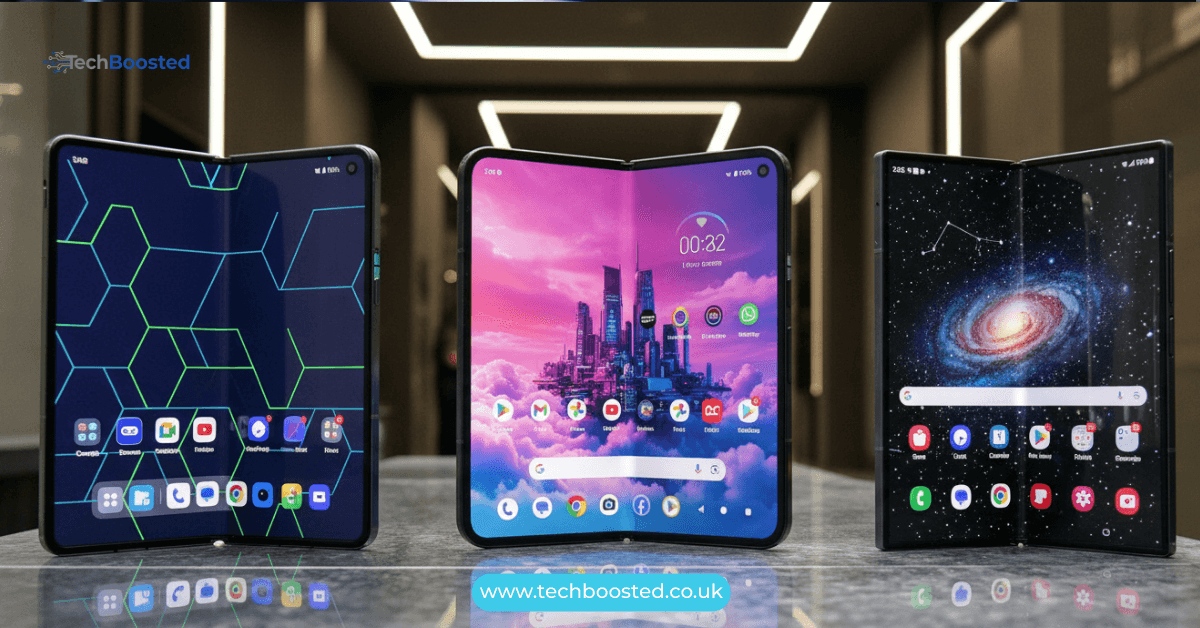
Foldable smartphones have officially moved from experimental gadgets to mainstream devices that millions of people use daily. What started as a bold concept in 2019 has now matured into a highly competitive category led by Samsung, Google, Huawei, Honor, OnePlus, Xiaomi, and even newcomers like Vivo and Oppo. In 2025, owning a foldable smartphone is no longer about showing off it’s about getting a genuinely better mobile experience through larger screens, improved multitasking, and creative form factors that traditional slab phones simply can’t match.
What Exactly Is a Foldable Smartphone?
A foldable smartphone is a mobile device built around a flexible OLED or AMOLED display that can bend along a precision-engineered hinge, allowing the phone to open like a book (book-style) or flip vertically (flip-style). When closed, most foldables look and feel like a regular smartphone, but when opened, they transform into a mini-tablet with screen real estate ranging from 7.6 inches to 8.2 inches diagonally. Advanced models now use Ultra Thin Glass (UTG) or multi-layer polymer stacks that dramatically reduce the visible crease and improve durability over the early plastic-only screens.
The Two Main Types of Foldable Smartphones
There are two dominant designs in 2025:
- Book-style (Inward-folding) – Popularized by the Samsung Galaxy Z Fold series, Google Pixel 9 Pro Fold, OnePlus Open, Honor Magic V3, Vivo X Fold 3 Pro, and Xiaomi Mix Fold 4. These devices fold inward to protect the main screen and offer the largest usable display when open.
- Flip-style (Clamshell) – Led by the Samsung Galaxy Z Flip series, Motorola Razr 50 Ultra, Oppo Find N3 Flip, and Huawei Pocket 2. These fold vertically like the classic flip phones of the 2000s but come with a usable cover screen and a large internal display when opened.
Each style serves different needs: book-style for productivity and media consumption, flip-style for compactness and style.
How the Crease Problem Was Finally Solved
One of the biggest complaints about early foldables was the noticeable crease in the middle of the screen. By 2025, manufacturers have largely solved this issue. Samsung’s Galaxy Z Fold7 and Z Flip7 use an improved “water-drop” hinge design combined with second-generation Ultra Thin Glass 2.0, making the crease almost invisible under normal viewing angles. Honor claims its Magic V3 has the thinnest and least visible crease in the industry, while Vivo and Oppo have introduced “aerospace-grade” hinge materials that survive over 500,000 folds equivalent to opening and closing 130 times a day for 10 years.
Durability and Water Resistance Improvements
Early foldables were criticized for being fragile. That narrative has changed completely. Most 2025 flagships now carry IPX8 water resistance (Samsung, Google, OnePlus, Vivo) or full IP68 dust and water resistance (Honor Magic V3). Hinge mechanisms are now tested for 200,000–500,000 folds, and many brands offer free one-time screen replacement within the first year. Real-world drop tests show that modern foldables with Armor Aluminum frames and Gorilla Glass Victus 2 on the cover screens can survive everyday accidents just as well as traditional phones.
Camera Performance on Foldable Smartphones
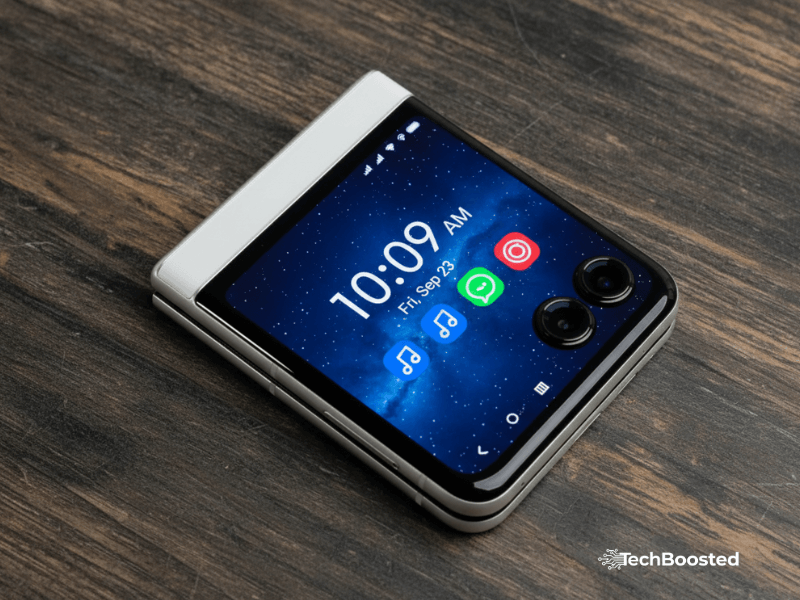
Camera quality used to be a weak point, but not anymore. The Samsung Galaxy Z Fold7 features the same 200 MP main sensor as the S25 Ultra. The OnePlus Open 2 and Vivo X Fold 3 Pro use Hasselblad and Zeiss tuning respectively, delivering flagship-level photography. Flip-style phones like the Motorola Razr 50 Ultra and Galaxy Z Flip7 now have larger sensors and proper ultra-wide lenses, eliminating the “compromise” label that used to follow foldables.
Battery Life and Charging Speeds
Battery anxiety is largely a thing of the past. Book-style foldables now pack 4,600–4,800 mAh batteries split into two cells on either side of the hinge, delivering all-day usage even with the large inner screen. The Honor Magic V3 and Xiaomi Mix Fold 4 push the envelope with 5,600–5,850 mAh silicon-carbon batteries and 100 W+ wired charging. Even flip phones like the Galaxy Z Flip7 offer 4,000–4,300 mAh batteries with 45 W charging numbers that rival or beat many traditional flagships.
Software Experience: Where Foldables Truly Shine
The real advantage of a foldable smartphone lies in its software. Samsung’s One UI 7 (based on Android 15) offers the most polished multitasking experience with drag-and-drop between three apps, Flex Mode for half-screen apps, and seamless app continuity. Google’s Pixel 9 Pro Fold brings pure Android with Gemini AI deeply integrated for split-screen translation, live transcription, and smart photo editing. OnePlus Open Canvas, Honor MagicOS, and Vivo OriginOS all provide unique multi-window systems that make a 7.8–8.2-inch screen feel genuinely useful rather than just big.
Pricing and Market Reality in 2025
Foldable smartphones are no longer “twice the price” of regular flagships. While the Samsung Galaxy Z Fold7 starts at around £1,649 / $1,799, the Google Pixel 9 Pro Fold and OnePlus Open 2 come in at £1,499–£1,599. Mid-range options like the Nubia Flip 5G and Motorola Razr 50 start below £600, making flip-style foldables genuinely affordable. Aggressive trade-in programs and carrier deals often bring the effective price of a Z Fold7 or Pixel Fold down to £800–£1,000 for many buyers.
Why People Are Switching to Foldable Smartphones
Surveys in 2025 show three main reasons for adoption:
- Larger screen for videos, reading, and gaming without carrying a tablet
- Superior multitasking for work and study
- Compact form factor (especially flip phones) that fits easily in pockets
Social media influencers, students, and business professionals have become the biggest advocates, regularly posting about how a foldable replaced both their phone and tablet.
The Future of Foldable Smartphones (2026 and Beyond)
Rumors for 2026 are already exciting. Samsung is reportedly working on tri-fold designs, Huawei has shown prototypes with 10-inch screens when fully opened, and both Apple and Xiaomi are said to be preparing rollable concepts that extend horizontally. Under-display cameras are improving rapidly, and we may finally see crease-free displays using micro-LED or next-gen flexible glass by 2027.
Conclusion
The foldable smartphone category has matured faster than anyone predicted back in 2019. Today, these devices offer better displays, cameras, batteries, durability, and software experiences than many traditional flagships all while giving users two form factors in one device. Whether you choose a productivity-focused book-style foldable or a pocket-friendly flip phone, 2025 is the year when foldables stopped being “the future” and became the present. If you haven’t tried one yet, it’s time to reconsider what a smartphone can be.
FAQs
Are foldable smartphones worth buying in 2025? Yes the crease is minimal, durability has improved dramatically, and software takes full advantage of the form factor. They are no longer experimental devices.
Which foldable smartphone has the best battery life? The Honor Magic V3 and Xiaomi Mix Fold 4 currently lead with 5,600–5,850 mAh silicon-carbon batteries and excellent efficiency.
Do foldable phones still have a visible crease? Yes, but it’s barely noticeable on 2025 models (Samsung Z Fold7, Honor Magic V3, Vivo X Fold 3 Pro) and disappears completely when viewing content.
Can you use a screen protector on foldable phones? Most come with a pre-installed factory protector. Third-party tempered glass is not recommended on the inner screen, but many brands sell official replacements.
Are foldable smartphones repairable and how much does it cost? Yes. Samsung, Google, Honor, and OnePlus offer official inner-screen replacement programs ranging from £120–£450 depending on the model and region.
Is the Samsung Galaxy Z Fold7 or Google Pixel 9 Pro Fold better? It depends: choose the Z Fold7 for S Pen support, better cameras, and software features; choose the Pixel 9 Pro Fold for cleaner Android, wider outer screen, and lower price.
Stay connected with the latest smartphone reviews and tech news at TechBoosted.co.uk your trusted source for honest gadget insights!