

Table of Contents
The Consumer Electronics Show (CES) 2026 officially concluded on January 9, 2026, in Las Vegas after four days packed with groundbreaking announcements. Organized by the Consumer Technology Association, the event drew more than 130,000 attendees from over 150 countries and hosted over 4,000 exhibitors. The central theme this year was physical AI intelligence designed to perceive, reason about, and act in the real physical world. Key areas of focus included humanoid robotics, ultra-advanced displays, software-defined vehicles, sustainable enterprise solutions, and deeply personalized smart home technologies. Industry giants such as Nvidia, Hyundai, LG, Samsung, Siemens, and others moved beyond prototypes, revealing production timelines and early commercial deployments that clearly indicate the next major technology wave is already underway.
Physical AI: The Defining Vision of CES 2026
Physical AI stood as the most powerful and unifying theme throughout CES 2026. Nvidia CEO Jensen Huang delivered the headline keynote, confirming that the Vera Rubin architecture is now in full production. This new platform, built as the successor to Blackwell, is optimized specifically for massive-scale physical AI workloads in robotics, industrial automation, autonomous systems, and simulation. It brings major leaps in reasoning speed, physics simulation accuracy, memory bandwidth, and power efficiency. Nvidia further strengthened the open ecosystem by releasing additional physics-aware foundation models and expanding developer tools from the Cosmos and Isaac suites.
Humanoid Robotics: Production-Ready and Scaling Fast
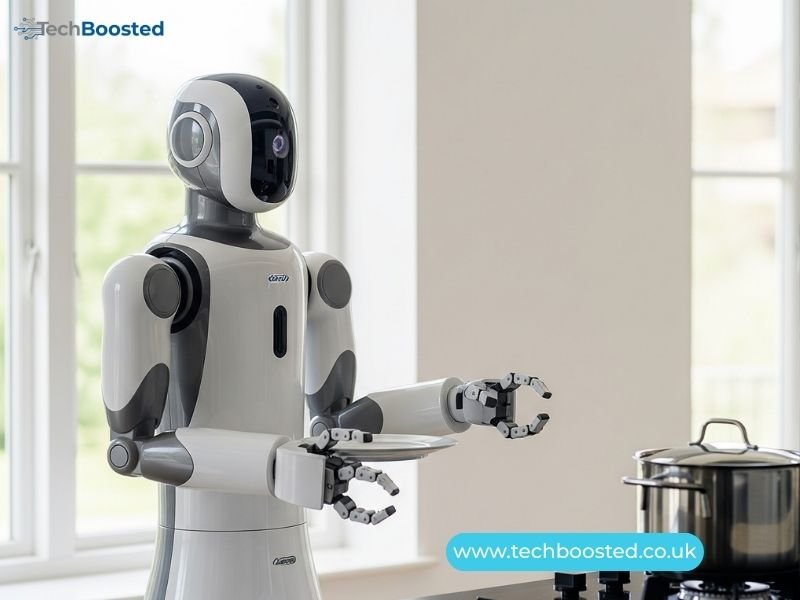
CES 2026 marked a historic milestone for humanoid robotics as several companies crossed the threshold from prototype to production. Boston Dynamics, in close partnership with Hyundai Motor Group, revealed the final production-ready version of the all-electric Atlas humanoid robot. This model features greatly improved dexterity, balance, speed, 30 kg payload capacity, and over four hours of continuous operation. First customer shipments are scheduled to begin later in 2026, with early units going to select Hyundai factories and Google DeepMind research labs. Hyundai has set an ambitious target of scaling to 30,000 units per year at its Georgia Meta plant starting in 2028.
Display Technology: Thinner, Brighter, and More Intelligent
Display technology achieved remarkable breakthroughs at CES 2026. LG Electronics introduced the latest evolution of its iconic Wallpaper OLED series the ultra-thin (under 1 cm), wireless, magnetically attachable OLED evo W6, which uses Primary RGB Tandem OLED technology to deliver significantly higher peak brightness. Samsung Display showcased next-generation Micro RGB modules capable of achieving full BT.2020 color volume at extreme brightness levels, including massive wall-sized display concepts. TCL highlighted major advancements in SQD-Mini LED backlighting, featuring thousands of local dimming zones and dramatically improved peak luminance. These new platforms combine extreme thinness, outstanding picture quality, intelligent AI processing, energy efficiency, and innovative form factors, fundamentally transforming visual experiences.
Mobility & Autonomy: The Rise of Software-Defined Vehicles
The automotive and mobility sector at CES 2026 focused intensely on software-defined, AI-powered vehicles. Nvidia unveiled its latest open autonomous driving reasoning model, codenamed Alpamayo, specifically engineered for complex urban robotaxi operations. Several major automakers and mobility providers announced expanded partnerships with Nvidia to integrate these capabilities into upcoming production vehicles. Mercedes-Benz demonstrated significantly improved hands-free Level 2+ driving in dense city environments. Continued progress was shown in solid-state battery technology, promising much faster charging times and higher energy density. Vehicles are rapidly evolving into continuously updatable, highly perceptive, intelligent platforms deeply connected to broader mobility ecosystems.
Smart Home & Consumer AI: Proactive, Contextual, Emotional
Consumer AI products at CES 2026 demonstrated a clear shift toward proactive, emotionally aware, and deeply contextual intelligence. Samsung significantly expanded its Bespoke AI ecosystem with enhanced vision, multimodal understanding, and inventory management in kitchen appliances. LG introduced “Affectionate Intelligence” a new framework that allows home robots and devices to recognize and respond appropriately to human emotional states and daily routines. A wide range of affordable AI-enhanced voice assistants, advanced health & fitness wearables, interactive educational toys, and privacy-first personal AI companions were displayed across every price category. The focus moved decisively toward anticipatory, understanding, and emotionally intelligent home ecosystems.
Sustainability Powered by Intelligence
Sustainability emerged as a serious, cross-cutting priority across CES 2026. Nvidia highlighted substantial energy efficiency gains in the Vera Rubin architecture compared to previous generations, directly tackling the growing power demands of large-scale AI. Siemens expanded its Xcelerator portfolio of virtual commissioning, digital twin, and simulation tools, enabling manufacturers to dramatically reduce physical prototyping, testing, and material waste. Adaptive lighting systems, HVAC optimization, circular battery designs, and AI-driven resource management solutions for buildings were widely showcased. Accessibility and inclusive design also received strong emphasis, proving intelligence is now one of the most powerful tools for achieving resource efficiency and environmental responsibility.
Gaming, Entertainment & Creative Innovation
Gaming and entertainment technologies continued their rapid evolution at CES 2026. Nvidia announced DLSS 4.5, featuring an advanced multi-frame generation technique that dramatically improves image quality and temporal stability at high frame rates. Lego unveiled its new Smart Brick platform physical bricks embedded with sensors, processing power, and AI capabilities that interact intelligently with digital play experiences. Powerful AI-assisted content creation tools were demonstrated across video, 3D modeling, music, and interactive media. Large-format, ultra-high-brightness, flexible, and rollable displays opened up entirely new possibilities for immersive entertainment and spatial computing experiences without headsets.
Healthcare, Wellness & Longevity Technologies
Healthcare and personal wellness received major attention at CES 2026. Non-invasive, continuous health monitoring devices including smart mirrors, advanced wearables, and ambient sensors were widely shown, capable of tracking dozens of biomarkers in real time. Strong focus was placed on privacy-preserving federated learning and on-device processing for sensitive health data. Several exhibitors presented AI systems designed to deliver personalized, proactive health insights and early warning signals. Companion and assistive robotics for elderly care and rehabilitation also made significant progress. The dominant theme was a clear shift toward continuous, predictive, personalized wellness management aimed at meaningfully extending healthy human lifespan.
Conclusion
CES 2026 will be remembered as the definitive event that signaled the arrival of the physical AI era. With the Vera Rubin platform entering full production, production-intent humanoid robots announced, ultra-advanced intelligent displays revealed, software-defined vehicles accelerating, and consumer AI becoming proactive and emotionally aware, the foundational technologies of the next decade are transitioning from research labs into real factories, showrooms, and homes. The strong emphasis on sustainability, accessibility, privacy, and human-centered design stood out compared to previous years. CES 2026 delivered the clearest and most concrete roadmap yet for how embodied artificial intelligence will fundamentally reshape society, industry, mobility, homes, healthcare, and entertainment in the years immediately ahead.
FAQ’s
When and where did CES 2026 take place? CES 2026 was held in Las Vegas from January 6 to January 9, 2026.
What was considered the biggest announcement at CES 2026? Nvidia’s confirmation that the Vera Rubin architecture for physical AI is now in full production was widely regarded as the most significant announcement.
Which humanoid robot achieved production status at CES 2026? Boston Dynamics and Hyundai unveiled the final production version of the all-electric Atlas humanoid robot, with first customer shipments planned for later in 2026.
What were the standout display innovations at CES 2026? LG’s ultra-thin wireless Wallpaper OLED evo W6 and Samsung’s next-generation Micro RGB modules offering exceptional brightness and full color volume were major highlights.
How did CES 2026 address sustainability? Key features included major efficiency gains in AI hardware, expanded digital twin and virtual prototyping tools, adaptive building systems, and circular battery solutions.
What was the overarching theme of CES 2026? The dominant theme was physical AI artificial intelligence capable of perceiving, reasoning about, and acting upon the physical world across robotics, mobility, homes, and industry.
Stay connected with techboosted.co.uk for more on emerging tech trends.