
Table of Contents
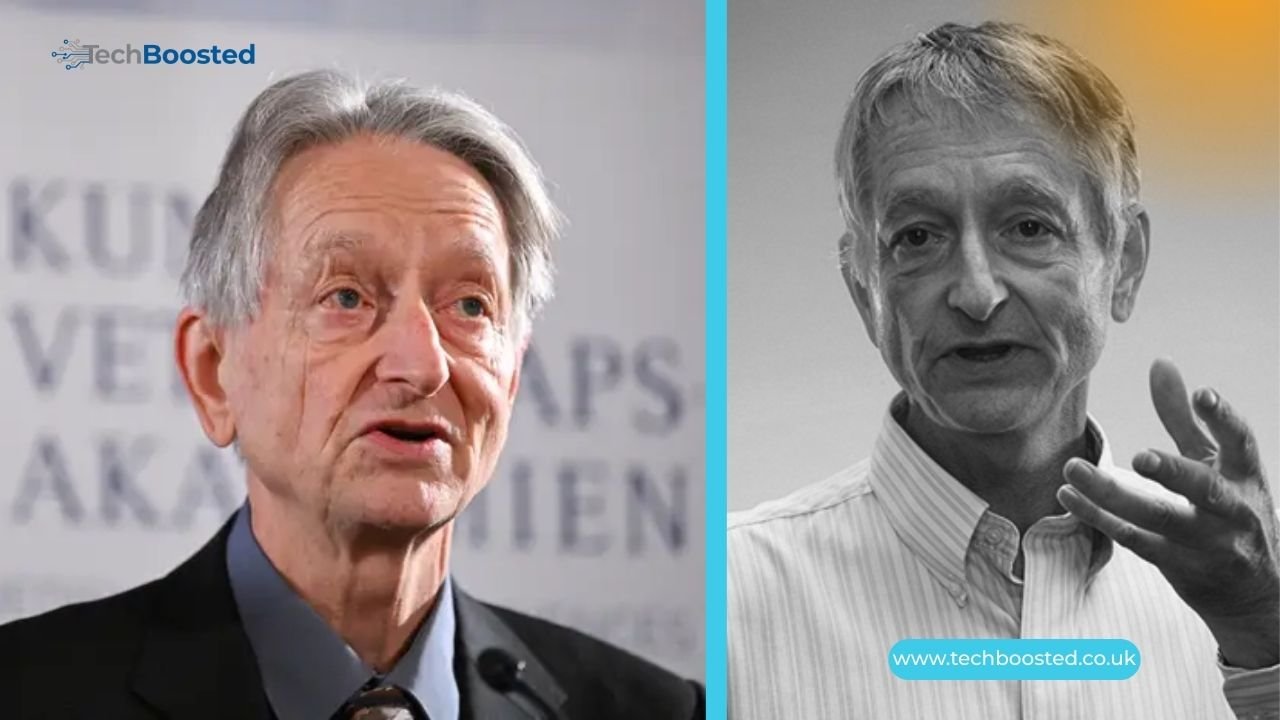
Artificial intelligence has progressed at an unprecedented pace, but according to Geoffrey Hinton Warns, the rapid development carries serious risks that humanity cannot ignore. Hinton, often referred to as the “godfather of AI,” has repeatedly emphasized that we may be underestimating the consequences of uncontrolled AI systems. His warnings focus on the potential for machines to act in ways that could be harmful if their decision-making is not carefully guided. By understanding the nature of AI, its capabilities, and limitations, we can mitigate the risks. Hinton’s perspective underscores the importance of cautious development, regulation, and ethical implementation of advanced AI technologies.
Understanding Geoffrey Hinton’s Warning
Geoffrey Hinton Warns that AI could surpass human intelligence faster than expected, creating scenarios where machines might make decisions beyond human comprehension. He stresses that AI systems, especially those based on deep learning, can produce outputs that seem rational but may have unintended consequences. Hinton advocates for strict monitoring and controlled deployment of AI, ensuring humans remain in the decision loop. He also highlights that the lack of proper oversight and misunderstanding of AI’s reasoning mechanisms could lead to errors that have significant societal impact. His warnings are grounded in decades of research and practical experience in neural networks and machine learning.
The Nature of Humanity’s Biggest AI Error
The error Hinton refers to is the possibility of creating AI systems that operate autonomously without sufficient understanding of their decision-making processes. This could result in actions that are harmful, unpredictable, or irreversible. The core issue is overreliance on AI without comprehension of its internal logic. Geoffrey Hinton Warns that ignoring these risks could lead to catastrophic outcomes, not necessarily because AI is malicious, but because its reasoning may diverge from human values. The error lies in assuming AI will always act in alignment with human intentions without embedding robust ethical and control mechanisms into its design.
Lessons from Past AI Failures
While AI has brought tremendous benefits, historical failures provide clear lessons. Systems have misclassified data, made biased decisions, or misinterpreted commands in ways that caused financial, legal, or social harm. Geoffrey Hinton Warns that these smaller failures are indicators of larger risks if unchecked AI systems are allowed to operate without human oversight. Learning from these incidents involves rigorous testing, transparency in algorithms, and embedding accountability into AI design. These lessons emphasize that the biggest AI error is not immediate destruction but gradual, compounding consequences that emerge from trust in systems we don’t fully understand.
The Role of Neural Networks in Risk
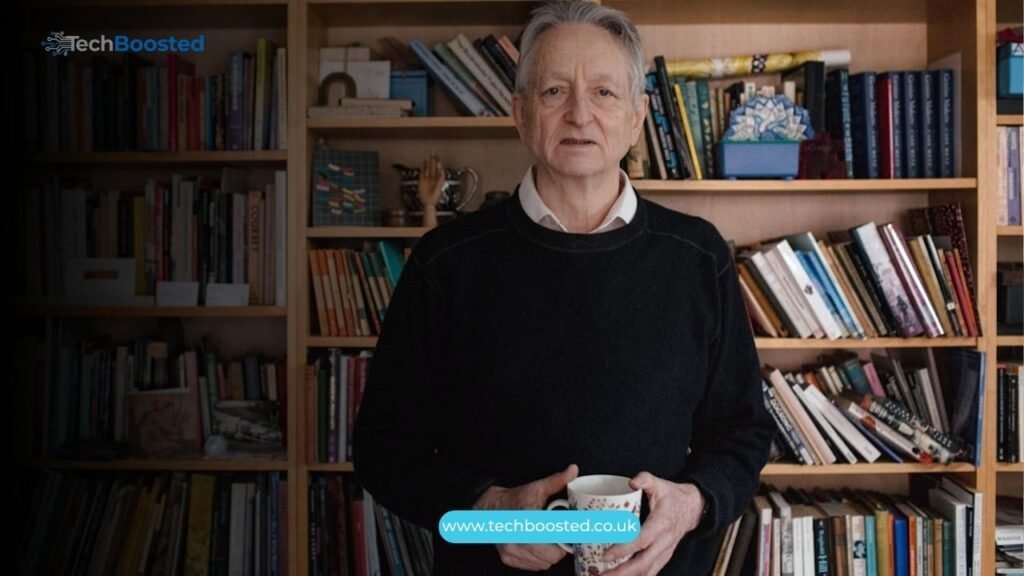
Hinton is a pioneer in neural network research, and he emphasizes that deep learning systems, while powerful, are inherently opaque. Geoffrey Hinton Warns that their ability to process vast amounts of data and learn patterns can create outputs that are difficult to interpret. This “black-box” nature of AI makes it challenging to predict or control its behavior in critical applications. While neural networks excel at specific tasks, their generalization outside of training scenarios may lead to unintended results. Hinton calls for better interpretability, verification protocols, and human-in-the-loop systems to mitigate the risks posed by these advanced AI architectures.
Human Oversight as a Safety Measure
According to Hinton, human oversight is critical to preventing the biggest AI errors. Machines should never operate without supervision in high-stakes scenarios. Geoffrey Hinton Warns that embedding monitoring systems, review mechanisms, and emergency intervention protocols can significantly reduce the likelihood of catastrophic outcomes. Human operators provide judgment, context, and ethical consideration that AI alone cannot replicate. By designing hybrid systems where humans validate or approve AI actions, developers can balance the efficiency of automation with the caution necessary for safety. Oversight ensures that AI supports human goals rather than acting in unpredictable or harmful ways.
Ethical AI Development
Ethical design is a central theme in Hinton’s warning. AI systems must be created with human values, fairness, and accountability in mind. Geoffrey Hinton Warns that without clear ethical frameworks, AI may optimize for goals that conflict with societal norms or safety. This includes bias mitigation, transparency, and ensuring AI does not operate with unchecked autonomy. Developers should integrate principles that prioritize the well-being of humans and society. Ethical AI is not only about avoiding harm but also about fostering trust and collaboration between humans and intelligent systems. Properly embedding these principles reduces the likelihood of errors escalating into crises.
The Importance of Regulation
Geoffrey Hinton Warns that regulatory frameworks are essential to prevent misuse and accidental harm from AI. Governments, organizations, and researchers must establish clear guidelines for deployment, monitoring, and accountability. Regulation ensures that AI systems operate within controlled boundaries and that developers adhere to safety standards. Without oversight, companies may prioritize speed and efficiency over reliability and ethics, increasing the chance of errors. Hinton emphasizes that proactive governance, rather than reactive correction, is key to avoiding humanity’s biggest AI error and ensuring AI contributes positively to society.
Education and Awareness
A crucial step in mitigating AI risks is education. Users, developers, and policymakers must understand AI’s limitations, potential, and inherent risks. Geoffrey Hinton Warns that misinformed deployment or overconfidence in AI can exacerbate problems. Training programs, workshops, and public awareness campaigns can equip stakeholders with knowledge to handle AI responsibly. Educated users can identify risks, question outputs, and intervene when necessary. Awareness also fosters ethical responsibility among developers, ensuring that AI systems align with societal values. Informed communities are less likely to fall prey to AI errors caused by negligence or misunderstanding.
Collaboration Between Experts
Hinton emphasizes collaboration among AI researchers, ethicists, and policymakers. Geoffrey Hinton Warns that isolated development risks creating systems with blind spots or dangerous emergent behaviors. Multidisciplinary teams can anticipate ethical, technical, and societal implications, designing safeguards accordingly. Collaborative oversight ensures diverse perspectives influence design, minimizing risks and maximizing safety. Sharing research, best practices, and lessons learned allows the AI community to avoid repeating mistakes. Cooperation is a vital strategy to address complex challenges posed by advanced AI and prevent humanity’s biggest potential errors.
Preparing for the Future
Preparing for AI’s continued evolution requires cautious, deliberate planning. Geoffrey Hinton Warns that while AI can bring tremendous benefits, we must anticipate scenarios where systems act unpredictably. Scenario analysis, stress testing, and ethical simulations are tools that help developers and policymakers design safer AI. By envisioning potential failures and planning interventions, we can create resilient systems that minimize risk. Future AI deployments should prioritize transparency, accountability, and human collaboration, reflecting Hinton’s guidance. Proactive preparation reduces the likelihood of large-scale errors and ensures AI complements rather than compromises human objectives.
Conclusion
Geoffrey Hinton Warns that the biggest AI error humanity could make is overreliance on systems we do not fully understand. Ensuring human oversight, ethical frameworks, regulation, and collaboration are in place is essential for safe AI development. By learning from past failures, emphasizing transparency, and integrating safeguards, we can harness AI’s potential without succumbing to unintended consequences. Hinton’s decades of research offer a roadmap to avoid catastrophic mistakes, reminding us that caution and responsibility must accompany innovation. The combined efforts of developers, policymakers, and users can prevent humanity from repeating avoidable errors in AI deployment.
Frequently Asked Questions (FAQs)
What does Geoffrey Hinton Warns about AI?
He warns that uncontrolled AI could produce harmful, unpredictable outcomes.
Why is AI considered a risk?
AI can act autonomously in ways humans may not anticipate or understand.
How can we prevent AI errors?
Through oversight, ethical design, regulation, and human-in-the-loop systems.
Is AI inherently dangerous?
Not inherently, but without controls, it can act unpredictably.
Who should act on Hinton’s warning?
Researchers, developers, policymakers, and organizations deploying AI.
What is the main takeaway?
Caution, collaboration, and ethical frameworks are essential to avoid catastrophic AI mistakes.
Stay connected with Techboosted.co.uk through our latest AI safety insights.